TL;DR
Lyocell fabric is soft, breathable, and often marketed as sustainable. But it’s also sensitive to processing and handling. Small variations in finishing, dyeing, and construction can affect performance. Sampling and supplier control matter more than most buyers expect.
Lyocell Fabric Feels Easy… Until You Work With It
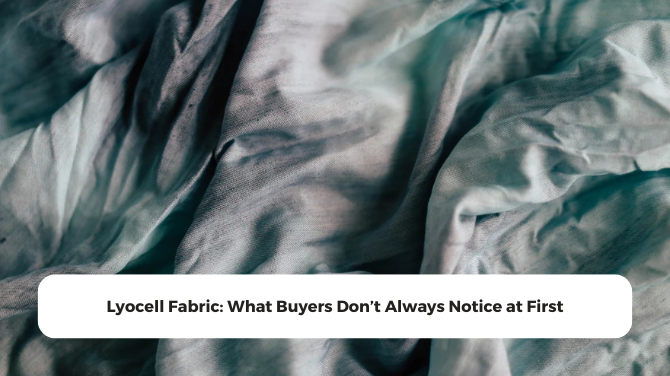
The first time you touch lyocell fabric, it feels like an easy decision.Soft, smooth, slightly cool to the touch. Drapes well too.Most buyers like it immediately. And that’s fair. But once you start working with it across multiple orders, things get a bit more detailed. Not complicated exactly… just more sensitive than expected.
I remember a buyer mentioning how their first order went perfectly. No complaints. But the second order felt slightly different. Same specs, same composition, but the fabric didn’t fall the same way. Not a huge issue. But enough to notice. That’s usually where the learning starts.
Check out our Digital Fabric Swatch here
What Is Lyocell Fabric, Really?
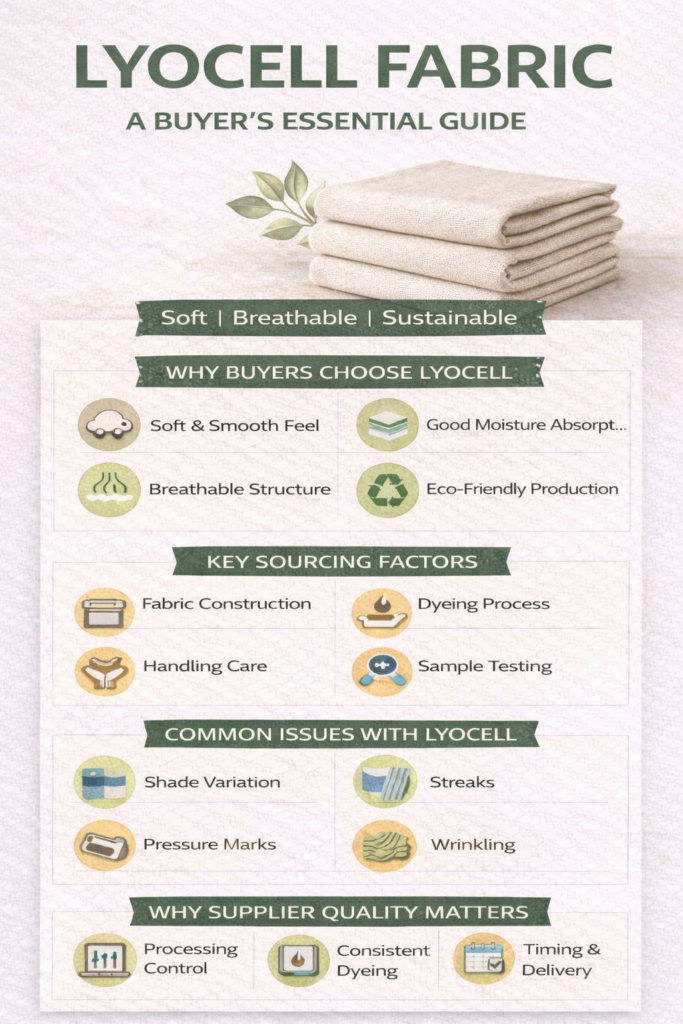
Lyocell is a fiber made from wood pulp, usually eucalyptus. It’s processed in a way that’s considered more environmentally controlled compared to traditional methods. From a sourcing point of view, what matters is how it behaves as a fabric.
Lyocell is known for:
- softness
- smooth surface
- good moisture absorption
- breathable structure
It’s often grouped together with Tencel, since Tencel is actually a branded version of lyocell.
But again, the fiber alone doesn’t decide everything.
Why Buyers Are Moving Toward Lyocell
There’s been a clear shift in sourcing preferences. Buyers are not just looking at cost or durability anymore.
They’re also thinking about:
- comfort
- sustainability
- overall feel
Lyocell fits into that space quite well. It offers a cleaner surface compared to many cotton fabrics, and a softer feel compared to most synthetics.
You’ll see it used in:
- shirts
- dresses
- relaxed garments
- lightweight apparel
In some cases, brands use it for the same reason they use textured options like cotton slub fabric, to create a certain feel or identity in the garment, not just functionality.
Fabric Construction Still Changes Everything
This is where assumptions usually start. Because lyocell feels soft, buyers sometimes assume all lyocell fabrics behave the same. But they don’t. Two lyocell fabrics can feel similar at first, but perform differently depending on:
- weave or knit structure
- GSM
- finishing
A lighter construction might drape better but could wrinkle more easily. A slightly tighter weave might hold structure better but feel less fluid. If you’ve seen how structure affects fabrics like the ones explained in dobby fabrics, you’ll understand that construction plays a bigger role than composition alone.
Dyeing Lyocell Needs More Control Than It Seems
Lyocell absorbs dye well. That’s one of its strengths. But it also means inconsistencies show up more clearly. If the process is not controlled properly, you might notice:
- slight shade differences
- uneven dyeing
- streaks in certain lighting
These are not always obvious immediately. Sometimes they show up after washing or finishing. The principle is similar to what we discussed in criteria for selecting dyes by fibre content, where fiber behavior directly affects dye outcomes. With lyocell, that sensitivity is slightly higher.
Handling and Processing Can Change the Outcome
This is one area buyers don’t always consider. Lyocell is softer, but that also means it’s more prone to:
- creasing during handling
- pressure marks
- surface changes if not processed carefully
I’ve seen cases where fabric was fine at the weaving stage, but handling during finishing created visible marks. Not a defect exactly. Just a result of how the fabric reacts.
That’s why process control matters here.
Sampling Shows You What Specs Don’t
Sampling becomes more important with lyocell. Because small differences show up more clearly. Buyers should check:
- drape and fall
- surface finish
- behavior after washing
- color consistency
Sometimes, the fabric looks perfect until it’s washed or stitched. That’s when adjustments happen. We’ve seen similar patterns when working with early-stage checks like those discussed in woven sample, where catching issues early avoids bigger problems later.
Lyocell in Export Orders
When lyocell fabric is used for export, expectations are higher. Because it’s usually positioned as a premium fabric. Buyers expect:
- consistent softness
- uniform appearance
- clean finishing
Even small variations can affect how the final garment looks. And this is where coordination becomes important. We’ve seen similar challenges in sourcing situations like those explained in why buyers struggle with Indian woven fabric exporters, where process gaps create issues over time.
Production Planning Still Matters
Even though lyocell feels soft and simple, production still involves multiple steps:
- yarn preparation
- weaving or knitting
- dyeing
- finishing
If one stage shifts slightly, everything else follows. In one case, finishing took longer because additional care was needed to maintain surface quality. That small delay affected delivery timelines. Not dramatic, but noticeable.
Why the Supplier Matters More Than the Fabric
At some point, buyers shift their focus. From “what fabric should I use” to “who should I work with.” Because the supplier controls:
- processing consistency
- dyeing quality
- handling
- delivery timelines
With lyocell, this becomes even more important because of how sensitive the fabric is.
For example, even lighter structured fabrics like seersucker fabric require process control for consistency. With lyocell, that requirement is even stronger.
At Dinesh Exports, the approach is simple. Keep the process controlled so the bulk matches the approved sample as closely as possible.
Final Thoughts
Lyocell fabric offers a lot. Softness, breathability, and a cleaner finish. But it’s not something you treat casually. It needs attention across stages. Construction, dyeing, handling, and sampling all play a role. Once you start paying attention to these, sourcing becomes more predictable. And honestly, smoother. If you are looking for a reliable lyocell fabric manufacturer for your collections, please contact us.
Frequently Asked Questions
What is lyocell fabric made from?
It is made from wood pulp, usually eucalyptus, processed into fiber.
Is lyocell fabric sustainable?
Yes, it is considered more eco-friendly due to its production process.
Is lyocell better than cotton?
It depends on the use. Lyocell is softer and smoother, while cotton is more structured.
Does lyocell fabric wrinkle?
It can wrinkle slightly depending on construction and finishing.
Why is lyocell used in premium clothing?
Because of its softness, drape, and smooth appearance.